How Long Do Roofs, Siding and Windows Last?
Updated July 2026 • 9 min read • Home Exterior Planning
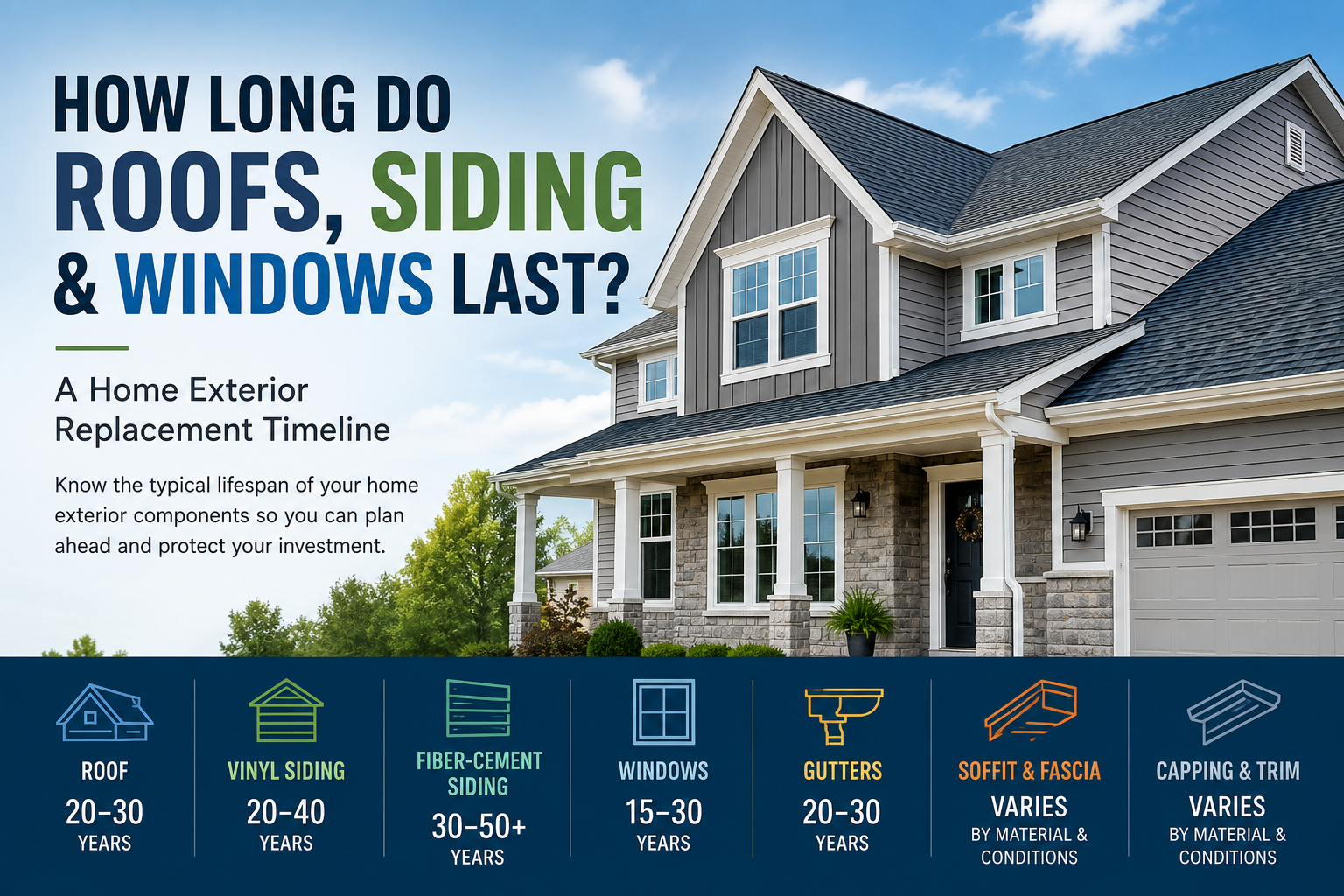
Every part of your home’s exterior has a limited service life. Knowing the approximate age of your roof, siding, windows, gutters, soffit, and fascia can help you plan repairs before leaks, drafts, or moisture damage become more expensive.
Lifespan Is a Planning Guide, Not a Guarantee
Exterior materials may last longer or fail earlier than the ranges shown below. Installation quality, ventilation, weather exposure, maintenance, water drainage, material quality, and storm damage all affect the actual service life.
Quick Home Exterior Lifespan Guide
| Exterior Component | General Planning Range | Common Warning Signs |
|---|---|---|
| Asphalt Shingle Roof | Approximately 20–30 years | Missing shingles, granule loss, curling, leaks, repeated repairs |
| Metal Roofing | Approximately 40–70 years | Loose fasteners, corrosion, damaged seams, failing coatings |
| Vinyl Siding | Approximately 20–40 years | Cracks, loose panels, fading, warping, moisture behind siding |
| Fiber-Cement Siding | Approximately 30–50+ years | Cracking, loose boards, damaged paint, failed caulk, moisture exposure |
| Replacement Windows | Approximately 15–30 years | Drafts, fogged glass, difficult operation, leaks, deteriorated frames |
| Gutters | Approximately 20–30 years | Leaks, sagging, corrosion, separated seams, repeated overflow |
| Soffit and Fascia | Condition and material dependent | Rot, peeling paint, stains, loose panels, pest damage |
| Window and Door Capping | Condition and installation dependent | Loose metal, open seams, dents, corrosion, exposed wood |
These ranges are general estimates. A professional inspection can help determine the current condition and remaining useful life of each component.
1) How Long Does an Asphalt Shingle Roof Last?
Many asphalt shingle roofs provide approximately 20 to 30 years of service. Premium shingles may last longer, while lower-quality materials, poor ventilation, improper installation, and severe weather can shorten the lifespan.
A roof may be aging prematurely when you notice:
- Shingles curling, cracking, or lifting
- Missing shingles after moderate wind
- Large amounts of granules in gutters
- Dark, exposed, or bald areas on shingles
- Repeated leaks in different roof sections
- Loose flashing around chimneys, vents, or walls
- Soft or damaged roof decking
- Visible sagging or uneven roof lines
Roof age is important, but condition matters more. A younger roof with poor ventilation or installation problems may require major repairs before an older roof that was installed and maintained correctly.
2) How Can You Estimate the Age of Your Roof?
If you do not know when the roof was installed, start by checking your home improvement records, inspection documents, previous owner disclosures, permit records, and roofing warranties.
You may also be able to estimate its age by reviewing:
- The date you purchased the home
- Old real estate listing photographs
- Contractor invoices or warranty paperwork
- Municipal permit history
- Insurance inspection reports
- The condition of neighboring homes built at the same time
Visual appearance alone cannot confirm the exact age of a roof. Similar shingles can look very different depending on sun exposure, tree coverage, ventilation, and maintenance.
3) How Long Does Vinyl Siding Last?
Vinyl siding commonly lasts approximately 20 to 40 years. Its longevity depends heavily on installation, material thickness, sun exposure, wind, temperature changes, and whether moisture is properly directed away from the wall system.
Signs that vinyl siding may need attention include:
- Cracked, chipped, or punctured panels
- Loose siding that rattles in the wind
- Warping or buckling
- Large areas of uneven fading
- Open seams around windows and doors
- Water stains or soft materials beneath the siding
- Repeated sections pulling away from the home
- Higher heating or cooling costs caused by air leakage
Fading alone does not always mean siding must be replaced. Cracks, loose panels, moisture intrusion, damaged sheathing, and widespread installation problems are more serious concerns.
4) How Long Does Fiber-Cement Siding Last?
Fiber-cement siding can often provide approximately 30 to 50 years or more of service when installed and maintained properly. It is durable, but it still requires correct flashing, joint treatment, painting, caulking, and clearance from roofing, soil, and standing water.
Watch for:
- Cracked or broken boards
- Loose sections
- Paint failure or exposed material
- Open joints
- Failed caulk around openings
- Moisture damage near the bottom of the wall
- Improper contact with roofing or ground surfaces
Individual damaged boards can sometimes be repaired. Widespread cracking, moisture damage, or installation problems may require a larger replacement project.
5) How Long Do Replacement Windows Last?
Many replacement windows last approximately 15 to 30 years. The frame material, glass package, installation, exposure to moisture, maintenance, and how frequently the windows are operated all influence their lifespan.
Common signs that windows are reaching the end of their service life include:
- Cold or warm drafts around the frame
- Condensation or fog between glass panes
- Windows that are difficult to open, close, or lock
- Water stains around the frame or sill
- Soft, cracked, or deteriorated wood
- Loose exterior capping
- Broken balances, locks, or operating hardware
- Noticeable outside noise entering the home
A draft does not always mean the entire window must be replaced. The problem may come from damaged caulk, exterior capping, weatherstripping, or installation gaps. Fog between panes, however, commonly indicates a failed insulated-glass seal.
6) How Long Do Gutters and Downspouts Last?
Aluminum gutters commonly provide approximately 20 to 30 years of service when they are properly secured, regularly cleaned, and protected from falling branches, ice, and standing water.
Replacement may be needed when you notice:
- Repeated leaks at multiple seams
- Large sections pulling away from the fascia
- Persistent sagging or improper slope
- Cracks, corrosion, or holes
- Water overflowing despite regular cleaning
- Downspouts that frequently separate
- Water collecting near the foundation
- Damaged fascia behind the gutter
A single loose bracket or leaking joint may be repairable. Widespread deterioration or an improperly sized drainage system may justify replacement.
7) How Long Do Soffit and Fascia Last?
Soffit and fascia lifespan depends on the material, roof drainage, ventilation, paint condition, and exposure to moisture. Aluminum- or vinyl-covered components may last for decades, while exposed wood can deteriorate much sooner when water enters behind the covering.
Look for:
- Peeling or bubbling paint
- Soft or rotted wood
- Loose soffit panels
- Water stains beneath the roof edge
- Open gaps near gutters or roof flashing
- Bird, insect, or animal activity
- Poor attic airflow
- Sections separating from the home
Soffit or fascia damage is often a symptom of another problem, such as a leaking gutter, damaged roof edge, failed flashing, or inadequate ventilation.
8) What Can Shorten the Life of Your Home Exterior?
Exterior materials often fail early because of installation or water-management problems rather than age alone.
Common causes of premature deterioration include:
- Improper roofing or siding installation
- Insufficient attic ventilation
- Damaged or missing flashing
- Clogged or incorrectly pitched gutters
- Water draining toward the foundation
- Tree branches rubbing against the roof or siding
- Repeated hail or wind damage
- Open caulk joints around windows and doors
- Moisture trapped behind siding
- Delayed repairs after leaks or storm damage
A Small Exterior Problem Can Affect Several Components
For example, a leaking gutter may damage the fascia, soffit, siding, window trim, and wall sheathing. Identifying the original source of the problem is often more important than replacing only the visibly damaged surface.
9) Should You Repair or Replace?
Repair may be the better choice when damage is limited, matching materials are available, and the remaining exterior is still in good condition.
| Repair May Make Sense When | Replacement May Make Sense When |
|---|---|
| The damage is limited to a small area | Damage is widespread across several areas |
| The surrounding material remains in good condition | The material is near or beyond its expected lifespan |
| Matching materials are available | Matching materials are discontinued or noticeably different |
| There is no hidden moisture or structural damage | Water has damaged sheathing, framing, or insulation |
| The problem has not happened repeatedly | Multiple repairs have already been completed |
| The repair provides a dependable long-term solution | Repair costs are becoming a significant portion of replacement cost |
A professional inspection should identify both the visible damage and the condition of the materials behind it. The least expensive immediate repair is not always the lowest-cost long-term solution.
10) Which Exterior Project Should You Complete First?
When several parts of the exterior need attention, prioritize protection from water and structural damage before cosmetic improvements.
- Active leaks and structural concerns: Address water intrusion, unsafe materials, damaged decking, and deteriorated sheathing first.
- Roofing and flashing: A reliable roof protects the siding, windows, insulation, ceilings, and interior finishes below it.
- Damaged sheathing and wall protection: Repair moisture-damaged wall materials before installing new siding.
- Windows and doors: Complete replacements before final siding and capping work when the projects overlap.
- Siding, exterior trim, soffit, and fascia: Restore the exterior weather barrier and finish details.
- Gutters and downspouts: Confirm that the finished drainage system directs water safely away from the home.
The correct project order may change based on the home’s construction and the source of existing damage. Coordinating related projects can reduce duplicated labor and prevent newly installed materials from being disturbed later.
Planning an Exterior Replacement?
Use our online estimators to get a starting price range for roofing, siding, or replacement windows. A site inspection can then confirm measurements, existing conditions, and project requirements.
Frequently Asked Questions
How long does an asphalt shingle roof last?
Many asphalt shingle roofs provide approximately 20 to 30 years of service. Shingle quality, installation, attic ventilation, weather exposure, maintenance, and previous storm damage can all affect the actual lifespan.
How long does vinyl siding last?
Vinyl siding commonly lasts approximately 20 to 40 years. Proper installation, secure panels, effective water management, and regular maintenance can help extend its service life.
How long do replacement windows last?
Many replacement windows last approximately 15 to 30 years. Window material, glass quality, installation, moisture exposure, maintenance, and operating frequency all influence longevity.
Should exterior materials be replaced based only on age?
No. Age is only one factor. The condition of the material, repair history, active leaks, energy performance, installation quality, and extent of damage should also be considered.
Which exterior project should be completed first?
Active leaks and structural concerns should be addressed first. Roofing and flashing are commonly prioritized before siding, windows, gutters, soffit, fascia, and cosmetic exterior improvements.
Can damaged roofing, siding, or windows be repaired instead of replaced?
Yes. Localized damage may often be repaired when the surrounding materials remain in good condition. Replacement may be more practical when damage is widespread, materials are near the end of their lifespan, or repairs have become frequent.
Related Homeowner Guides
Storm Damage Checklist
Learn what to inspect after strong winds, hail, heavy rain, or falling branches.
View Storm Damage Checklist →Roof Maintenance Tips
Use simple roof checks to identify early damage and reduce the risk of expensive leaks.
Read Roof Maintenance Tips →Exterior Upgrade Signs
Learn which roofing, siding, and window warning signs homeowners should not ignore.
Read Exterior Upgrade Signs →Elite Home Remodeling provides roofing, siding, replacement-window, soffit, fascia, gutter, and exterior remodeling services throughout Bucks County, Northeast Philadelphia, and surrounding communities. We help homeowners understand the condition of their exterior and provide clear repair or replacement recommendations.